
Reflecting On The 250th Anniversary Of Our Democracy
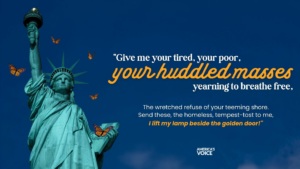
At a moment when immigrants, regardless of legal status, are being scapegoated and made to feel like “the other,” it is more important than ever for all Americans to embrace and recommit to the foundational tenets of this nation. As we celebrate the 250th anniversary of our democratic experiment, immigrants and their children are persisting day by day — even as our government kidnaps, racially profiles, and strips them of their right to live as Americans. Who gets to be an American — and who we want to be as a nation — have become central to our national conversation.
My own family’s immigration story began in the early 70s. We believed the U.S. was a faraway and prosperous land where everything was possible if you were willing to work hard. Our American story followed the pattern of millions of others: in one generation, we went from food service workers, construction workers, housekeepers, and parking attendants to engineers, business owners, government employees, and U.S. Marines — the embodiment of the American Dream. And this journey benefited not just those of us who migrated, but those in my family who stayed behind. Our economic success improved theirs. And despite some assumptions, our American-born kids are following the patterns of past generations — speaking English, climbing the socioeconomic ladder, and going further in school than we ever did. If the question for my generation was whether we would go to college, for our children, it is simply when.
Yet instead of seeing immigrants as a fundamental and revitalizing part of the American story, Trump and Stephen Miller think people like me and my family are a threat to a country they believe is theirs — and theirs alone. The constant barrage of immigration news, and the chaos with which Trump governs, obscures the deliberate way this administration is dismantling our principles of fairness and human dignity — stripping legal status from hundreds of thousands, gutting programs that attract the brightest minds from around the world, and hollowing out the workforce in key industries, among others. For a president who promised to bring down prices and protect families, it is breathtaking to watch him harm businesses, workers, and entire industries, all while pouring billions into masked agents patrolling our streets.
No policies are more emblematic of these heartless attacks than those targeting babies and children. In Tennessee, at the direction of Stephen Miller, the GOP is advancing a policy that would cut gravely ill undocumented children off from lifesaving medical care — or risk being reported to DHS. On Day 1 of his second term, Trump issued an executive order seeking to render babies born to immigrants stateless. Not satisfied with being rebuffed by the Supreme Court earlier this week, two GOP members of Congress promptly announced they would pursue the same goal through legislation, while Trump dismissed the Court’s ruling as “dumb.” In short, nothing and no one is off the table.
Trump, Miller, and their allies argue that the viciousness of their campaign is justified because today’s immigrants are different from those of the past. But while we may look different from the Italians, Germans, Scots, and Irish who came before us, something fundamental remains the same: we are here because we believe in the central tenets of the American story — life, liberty, and the pursuit of happiness.
Immigrants across generations share an unshakeable belief that in this land there is something better, something worth fighting for. To me, that is what it fundamentally means to be an American. It is telling that on this point I find myself in agreement with President Ronald Reagan, who in his farewell address reminded us: “You can go to live in France, but you cannot become a Frenchman. You can go to live in Germany or Turkey or Japan, but you cannot become a German, a Turk, or a Japanese. But anyone, from any corner of the Earth, can come to live in America and become an American.”
At a time when our own government seems to have abandoned the promise of America, it falls to all of us — immigrant and native-born alike — to recommit to what this country stands for. The ideas described in the Declaration of Independence, the Bill of Rights, the Constitution — may not have been written with us in mind. But what they describe is at the core of what immigrants believe and aspire to.
So on the Fourth of July, I will wear my red, white, and blue. I will bring out my flag and display it on my porch with a mix of pain and pride, hope and joy. Pain in knowing that our own government is targeting people like me. Pride in the courage and grit that my family and so many immigrant families demonstrate every single day. Hope that in the end, more of us will choose love over hate. And joy– knowing that at 9:30 pm ET I will be standing with my family and friends eating burgers and hot dogs, watching the fireworks, and recommitting with every fiber of my heart to our national motto: Out of many, one.
Immigrants Help Make America Winners and Our Sports Teams Great
Through the years, immigrants have been essential players helping American sports teams thrive and win. “In the 1950 World Cup, the U.S. team won an improbable victory over England on a goal by Haitian-born forward Joe Gaetjens”
Our nation’s strength, in particular when it concerns athletics, comes from recruiting the best of the best. And without our unique distinction as a nation of immigrants, the fact is we just wouldn’t be as competitive in sports. It was true during the 2026 Winter Olympics, and it’s no different during the ongoing 2026 World Cup games.
BRINGING TOGETHER THE BEST OF THE BEST THE WORLD HAS TO OFFER
“Six players on the U.S. men’s national soccer team at the 2026 World Cup were born outside the country. More than half the 26 men on the roster hold dual citizenship,” Newsweek reports. Gio Reyna, born in the United Kingdom, was one of the youngest U.S. players to feature in a senior match in 20 years at the time of his 2020 U.S. men’s national soccer team debut. Fellow teammates Antonee Robinson and Sebastian Berhalter were also born in the U.K. Other players also hail from Mexico, Germany, and the Netherlands.
“Many players are also first- or second-generation Americans of diverse descent,” notes The Wall Street Journal. “Forward Haji Wright was born to a father from Ghana and mother from Liberia. Striker Ricardo Pepi’s parents immigrated from Mexico. Attacking midfielder Christian Pulisic’s grandfather was a Croatian emigrant.” Folarin Balogun was born in the U.S. while his Nigerian-born mom was visiting from the U.K. During the team’s victorious match against Paraguay, he became “the first U.S. men’s national player to score two goals in a World Cup game since the inaugural tournament in 1930,” ESPN noted.
“This is nothing new: In the 1950 World Cup, the U.S. team won an improbable victory over England on a goal by Haitian-born forward Joe Gaetjens,” Reason said. It’s not just soccer, either. U.K.-born OG Anunoby was instrumental in the New York Knicks winning its first NBA title in more than 50 years. “The pool for talented athletes is global,” Reason continues. “Approximately 25 percent of MLB players are foreign-born, with the Dominican Republic the leading country of origin.”
Nearly 17% of the most recent U.S. Olympic team had direct immigrant roots. Team USA made sports history earlier this year after winning an astounding 12 gold medals in Milan – a national record for the Winter Olympics games. Notably, Alysa Liu – the daughter of a Chinese dissident who helped organize pro-democracy demonstrations after the Tiananmen Square massacre and eventually became a political refugee in the U.S. – made history as the “first American female singles figure skater to win a gold medal in 24 years,” the San Francisco Chronicle reported at the time.
THE SPIRIT CAN’T BE DAMPENED BY ANTI-IMMIGRANT GOVERNMENT RANTS
When immigrant roots run deep, it should be no surprise at all that our national pastimes aren’t immune from the regressive nature of anti-immigrant policies and attitudes. While soccer fans all over the world have been eagerly awaiting the World Cup games, the Trump administration’s aggressive immigration enforcement practices are partially to blame for a lackluster attendance here in the U.S., Florida Immigration Coalition’s Thomas Kennedy noted in his recent guest post at Charting a New Narrative on Immigration.
“The lack of interest in the World Cup is not surprising,” he wrote earlier this month. “The vibes are off. The Trump administration seems to be doing everything in its power to make the United States as unwelcoming a country as it can be as the tournament begins.”
On a micro level, Balogun – the star player who was critical in the American team’s 4-1 victory over Paraguay and scored those historic goals during the match – could have theoretically been ineligible to play for the American team if the administration’s unconstitutional executive order attacking birthright citizenship had been in place at the time of his birth. Under that un-American policy, “he wouldn’t have automatically received U.S. citizenship since his mom was a temporary visitor,” The Wall Street Journal notes. The U.S. Supreme Court is expected to issue a ruling on that order any day now.
What also deserves focus is what an Sharpie-scrawled executive order can’t extinguish no matter how the high court rules in the coming days: the values that live inside each and every one of us, as exemplified by the many Americans who have embraced – literally – visitors able to attend World Cup games in the United States.
“Unlike the 1994 World Cup, this one’s all being documented and displayed on social media — the University of Kansas marching band playing the Algerian national anthem to welcome the team, throngs of Iraqi fans beating darbuka drums on Boston Common, Belgian and Egyptian fans dancing arm-in-arm in the streets of Seattle,” reports The Boston Globe, noting foreign visitors celebrating their respective national teams in harmony with U.S. fans. “After watching our divisive politics from abroad, they actually came here, and met open, everyday Americans.”
CONTRARY TO OUR OWN GOVERNMENT, ORDINARY AMERICANS ARE WELCOMING THE WORLD WITH OPEN ARMS
Whether or not American fans realize it, they are actually rebuking the ugly, exclusionary vision currently dictating federal policies.
“The America we are experiencing right now is the America we were promised growing up,” Scottish visitor Laura Lawson said in a TikTok about the Boston community’s welcoming. “And to be totally honest, that was not the America we were expecting when we came here. We were very apprehensive. I was genuinely anxious. We were expecting to be met by ICE agents, aggressive police and the political climate that we see on the news.”
“What she found instead couldn’t be ‘further from the truth,’” The Boston Globe continued. “The Bostonians are something special …. My faith is restored in the United States of America.”
The Trump Administration Is Waging War On Children
500 infants and toddlers have been detained while hundreds of others face losing lifesaving healthcare due to the Trump administration’s mass deportation obsessions
Children continue to be abused in our name and with our tax dollars. Federal immigration data reveals that the Trump administration has detained at least 500 infants and toddlers since last year, finding that children have been detained in what parents have described as “substandard conditions” that have left youngsters “sick, isolated and regressing in their physical and intellectual development.”
“ICE has dramatically increased detentions of children aged 3 and under, holding 25 of them in custody on an average day between January 2025 and March of this year,” The Marshall Project and MS NOW report. That figure, based on records obtained by the Deportation Data Project, is “10 times higher than it was in the previous 12 months under former President Joe Biden. Back then, on an average day, fewer than three babies and toddlers were held at facilities across the country.”
Experts say that this increase in child detention under the mass deportation obsessions of the Trump administration – which just received another $70 billion in immigration enforcement spending thanks to its Congressional allies – could devastate their young lives for years to come.
“Marsha Griffin, a pediatrics professor and co-founder of the executive committee of the American Academy of Pediatrics’ Council on Immigrant Child and Family Health, called the period of infancy and toddlerhood ‘probably the most harmful time of their lives to have them in detention,’” the report continued. “‘Our immigration system is breaking children,’ she said.”
One toddler who was detained with his mom at the CoreCivic-operated migrant family jail in Texas stopped eating for nearly two weeks after his family was ripped apart by the administration, The Marshall Project and MS NOW said. Despite never missing a check-in since applying for asylum in 2024, ICE detained and separated the family, sending two-year-old Kaleth and his mom to Dilley and his dad to a detention facility in California.
Kaleth’s mom, Joani, said the toddler became so depressed while detained at Dilley that he stopped eating for 12 days. “When Joani tried to force him to eat, Kaleth vomited,” the report said. “He eventually stopped having bowel movements. Joani watched her son’s face grow gaunt, and his eyes sink into their sockets.”
Kaleth and his mom were finally released after two weeks, meaning that the child ate no solid food for nearly the entire duration of his detention.
“The long-term damage caused by prolonged toxic stress — by essentially abusing these children — we’re going to see those effects. They’re going to impact every child who was there for many, many years to come,” advocate Lori Goodman said in the report. “It’s incalculable the amount of damage that is being done.”
The Trump and Miller mass deportation attacks on children extend far beyond those in detention. “Families in Tennessee with critically ill or severely disabled children who are undocumented are being asked to make a difficult choice: leave the state program that pays for lifesaving medication and treatment or stay and have their child reported to immigration authorities,” The Washington Post reports.
The state program, Children’s Special Services, serves as a last resort for critically ill, low-income kids diagnosed with cancer, spina bifida, and terminal diseases, helping “pay for ventilators, wheelchairs or feeding tubes, for example, or for expensive drugs and emergency treatments” regardless of legal status, the report said.
But under a Republican-passed state law that requires local and state agencies to check the papers of anyone receiving a public benefit, critically sick children who lack legal immigration status could now be reported to a recently-created state agency that collaborates with federal officials. Hundreds of families in the state have since received a letter instructing them to either leave the program or face being reported.
But as the Tennessee Outlook notes, there is no other safety net alternative in the state available to these children. “This is life and death for very, very many of these kids,” Tennessee Justice Center Executive Director Michele Johnson tells The Washington Post.
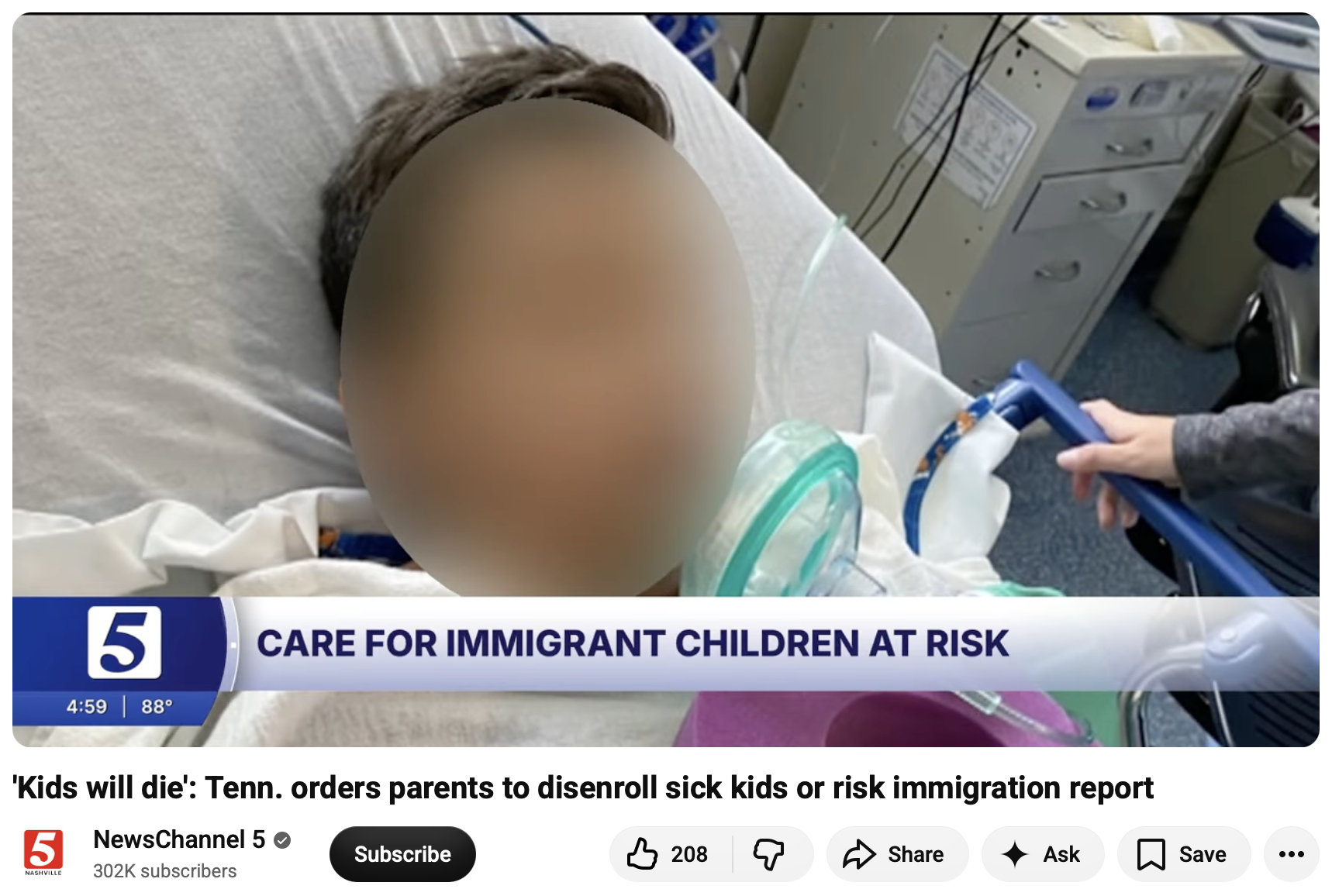
Gabriella, the asylum-seeking mom of a child with spina bifida, didn’t hesitate when she was told about the drastic changes by a Children’s Special Services coordinator: she would prioritize keeping her family together and disenroll. But now she doesn’t know what she’ll do to ensure her 10-year-old son can continue to receive the kind of lifesaving care he got under the program.
“Daneri is paralyzed from the waist down and uses a wheelchair,” The Washington Post reports. “He has had 12 operations, his mother said. He regularly has urinary infections, as is common with spina bifida, and he requires a catheter. Gabriella aids him with evacuating his bowels multiple times a day and administers his several daily medications. He also suffers from learning disabilities associated with the illness, and has autism.”
“I will not let him die. I will knock on doors, search for people, it doesn’t matter who I have to ask, who I have to talk to or wherever I have to travel. I will do anything,” the mom told The Washington Post. “Please tell people that my husband pays taxes,” Gabriella told the Tennessee Outlook. “We are not trying to take anything from other people. We are just trying to help our son, as any parent would.”
While the richest country in the world should not precondition healthcare accessibility on the ability to pay taxes, it is important to note that Gabriella’s family pays taxes that help fund this critical care. Nationwide, millions of undocumented immigrants pay billions in taxes to help fund federal programs they can’t access, such as Social Security and Medicare. And when billions are going to fund the kind of unpopular policies that could target Daneri and Gabriella, we have the means to take care of each other instead.
Other attacks against children also loom, including two potential Supreme Court rulings that could upend the lives of thousands of U.S. citizen kids. In Trump v. Barbara, up to 250,000 American citizen children annually could be born stateless should the justices side with the Trump administration’s unconstitutional executive order purporting to end birthright citizenship for the American-born children of certain non-citizen immigrants.
“What was once a fringe proposal championed by restrictionists in Congress has now become a central legal and political battle reaching the highest court in the land,” America’s Voice Legal Advisor David Leopold wrote in April. Affected children “would be forced into an underclass — denied access to health care and basic services, vulnerable to exploitation and abuse, and subject to constant risk of deportation through no fault of their own.”
In Trump v. Miot, Haitian immigrants who hold Temporary Protected Status could be forced to separate their families or uproot up to 50,000 American-born kids entirely should the justices also side with the administration’s lie-riddled attempt to terminate this humanitarian relief.
“Some of these children were born in the United States and are American citizens. Others arrived at an early age and have grown up in American schools and communities,” Thamara Labrousse, executive director of Haitian American organization Sant La, said in March “For many of them, the United States is the only home that they know. Their futures now hang in the balance.”
‘I Bow Before Your Dignity,’ Pope Leo XIV Tells Migrant Communities
The pontiff commemorated African migrants who’ve tragically drowned while seeking new lives in Europe and urged elected leaders everywhere to act and pass “legal and safe pathways”
Pope Leo XIV’s week-long visit to Spain included an urgent appeal for the recognition of the rights, dignity, and humanity of migrants, calling on the world to recognize vulnerable people forced to flee their homelands as more than just “a mere category or a statistic.”
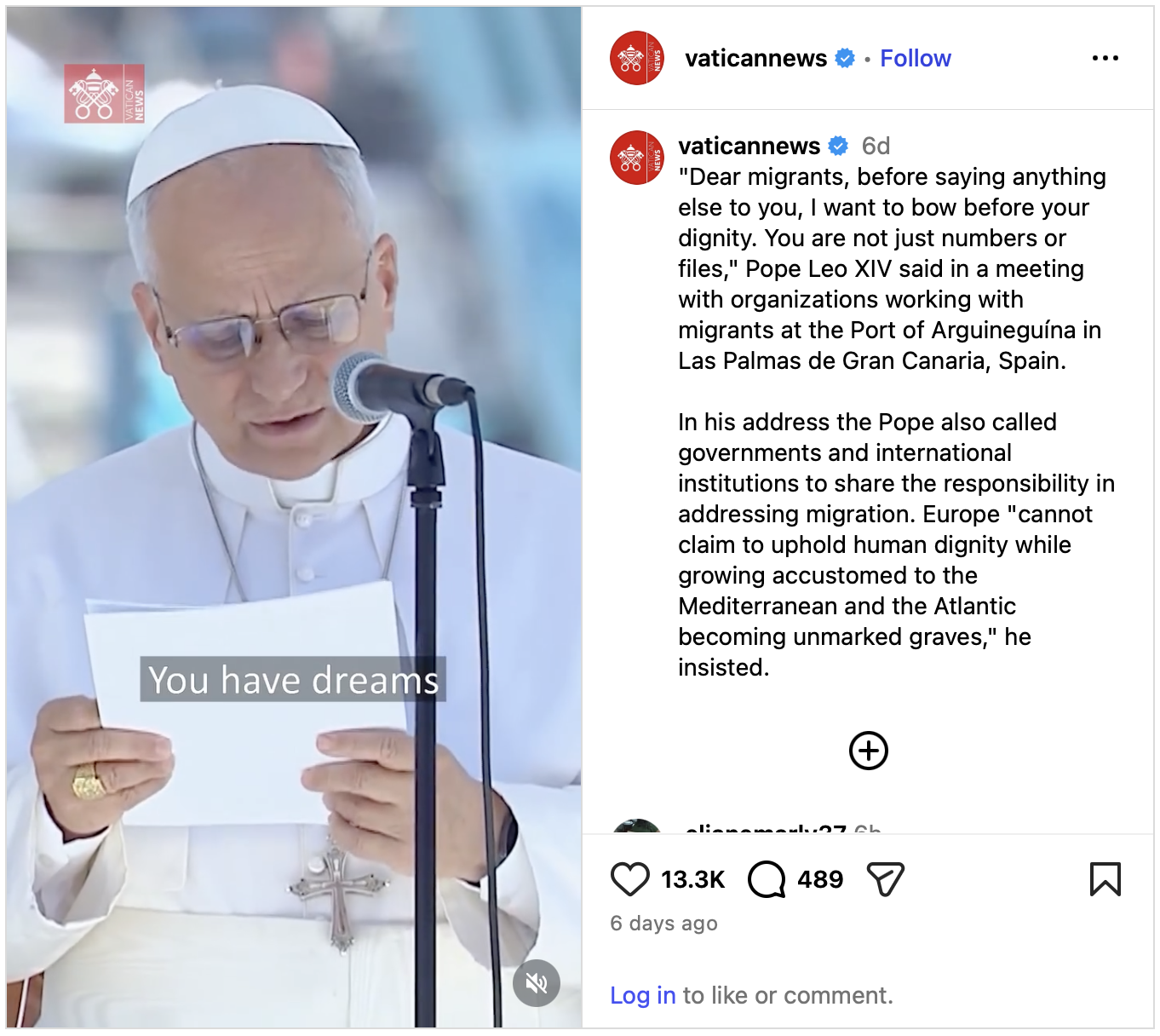
“Dear migrants, before saying anything else to you, I want to bow before your dignity,” Pope Leo said from the Canary Islands, the final destination of one of the deadliest routes for African migrants seeking new lives in Europe. “You are not just numbers or files. You are people who have left behind families and homes. You have dreams that no one has the right to despise.”
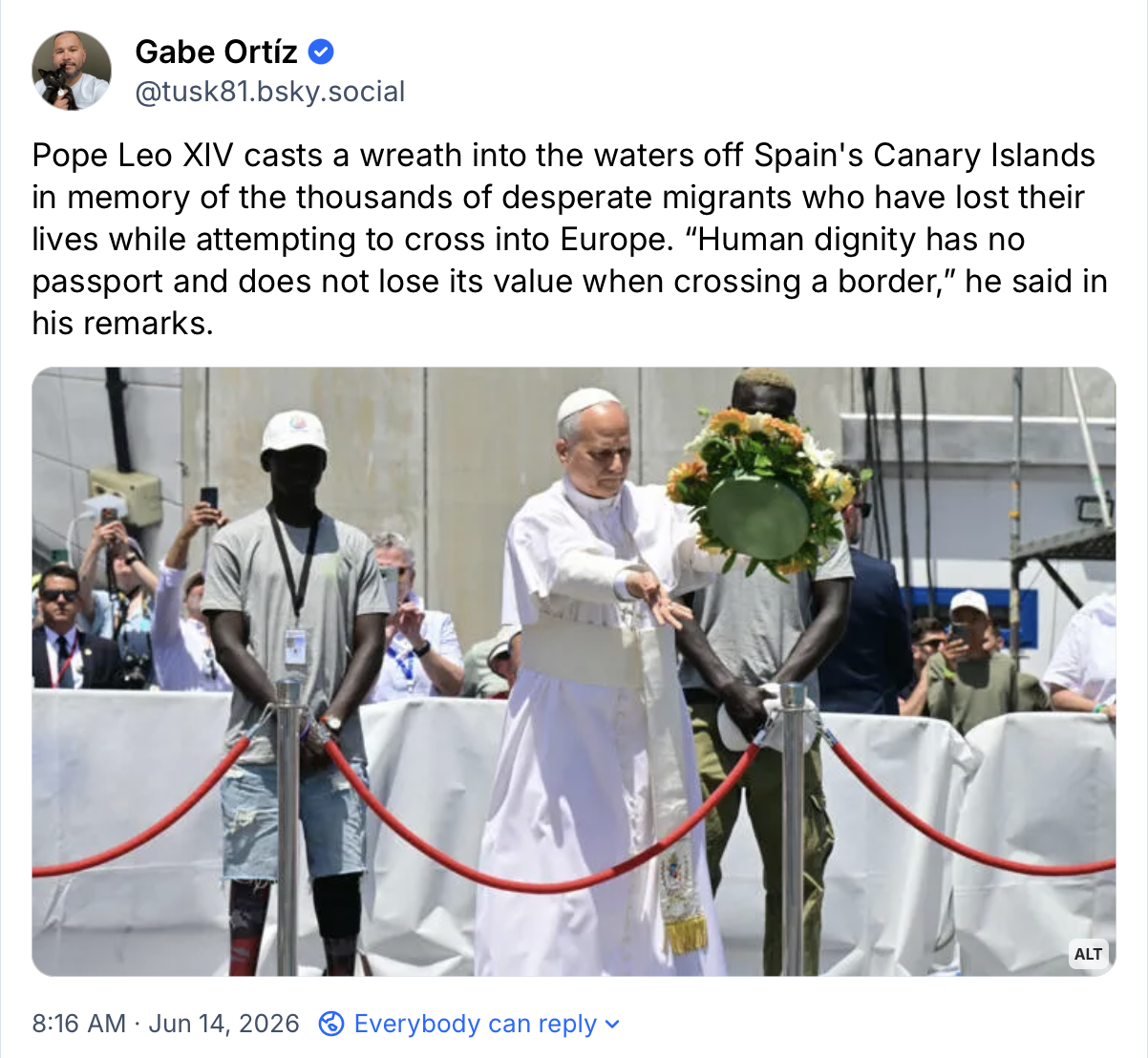
“Human dignity has no passport and does not lose its value when crossing a border,” he added.
Pope Leo’s visit to the island included a visit to a migrant center that provides emergency humanitarian aid to arriving individuals. Since opening five years ago, it has assisted 70,000 migrants, Jesuit magazine America reported. The organization currently shelters around 700 individuals, mostly from West Africa. “Here at Las Raíces, as in San Cristóbal de La Laguna, Leo listened to testimonies from migrants,” the report said.
One letter read to the pontiff during the trip – which included an address to the Spanish parliament emphasising respect for the dignity of migrants and other vulnerable individuals – was written by a survivor who “described being trafficked from Africa to Europe by a mafia-organized crime group, who told her she owed an equivalent of $28,000 upon arrival,” OSV News reported.
The woman, identified as “Blessing,” was kept captive in dehumanizing conditions for months “with barely any food, unable to bathe for weeks, living in conditions I wouldn’t wish on anyone,” she wrote. “And when the time came to cross the sea, I saw how the people who left before us that same day drowned.” Blessing said that she ultimately became pregnant as a result of sexual abuse by one of her traffickers and gave birth to a child that was immediately taken from her. She would not be reunited with her child until nearly a year later, when authorities arrested her abuser.
Pope Leo reserved some of his most poignant words for her and other migrants who’ve survived similarly horrific ordeals while fleeing their homelands.
“Dear Blessing, although you are not here today, your voice is,” Leo said, adding that he hoped his message to her – that her horrific ordeal does not define her – reached her and other survivors of human trafficking. “Your life does not belong to those who harmed you; your body does not belong to those who took advantage of you; your days do not belong to those who wanted to chain you to fear.”
Her dignity belongs to her and cannot be taken away, he continued. “We want to walk with you until that truth feels stronger than the pain.”
Pope Leo stated that government leaders have a moral duty to act on “legal and safe pathways,” “serious processes of reception and integration,” and “effective protection for victims” like Blessing. “Even today, monsters lurk in these seas: mafias that profit from despair, traffickers who enslave women and children, and those whose indifference allows the poor to be swallowed up by exploitation or forgetfulness.”
“While the Canaries, eight islands roughly 60 miles from the African coast, may be considered a vacation spot for wealthy Europeans,” Religion News Service reported, “the reality on the ground tells a deadlier tale, where tens of thousands of migrants arrive each year stranded on its rocky shores and thousands more die in its surrounding waters.”
According to the Caminando Fronteras, more than 3,000 migrants died trying to reach the Canary Islands in 2025. “More than 10,000 people were recorded to have drowned along this dangerous migration route in 2024, it added,” said the U.S. Conference of Catholic Bishops. The Missing Migrants Project, an initiative of the International Organization for Migration, estimates that nearly 35,000 migrants have gone missing while attempting to cross the Mediterranean Sea from northern Africa and Turkey into Europe.
During the Canary Islands visit, Pope Leo followed the example set by his predecessor and cast a wreath into the waters off the islands in memory of the missing and dead.
“The Successor of Peter cannot ignore these docks,” he said. “The Church cannot ignore these waters or any place where hunger, thirst, violence, fear or exile continue to wound human dignity.” During a large public service during the tour, Leo urged the faithful to pray “for our brothers and sisters who have lost their lives at sea.”
“In the first-ever papal address to Spanish lawmakers, the American pope said a ‘moral renewal’ was necessary in legislatures and public life to ensure respect for the inherent dignity of all people, including migrants,” PBS News reports. Spain “has bucked a trend in Europe and the United States” by passing legislation legalizing its undocumented population, the report said.
Reuters reports that the Spanish government, which has touted the economic benefits of legalization, has already received double the expected applications from migrants eagerly hoping to be better integrated into their new communities.
Here in the United States, Dreamers and other immigrant communities continue to push for similar legislation that would finally grant families long overdue relief. Pope Leo has also condemned the federal government’s mistreatment of undocumented communities, saying that “when people have lived good lives—many of them for 10, 15, 20 years—treating them in a way that is, to say the least, extremely disrespectful, and with instances of violence, is troubling.”
Earlier this year, Leo also selected a formerly undocumented immigrant to lead West Virginia Catholics. Evelio Menjivar-Ayala, who served as an auxiliary bishop in the archdiocese of Washington D.C. since 2023, is a Central American immigrant who fled for his life hidden in the trunk of a car. Menjivar-Ayala has supported Leo’s humane vision by asserting fierce support for immigrant communities as Washington’s auxiliary bishop, including penning an April 2025 National Catholic Reporter op-ed that rebuked the federal government’s mass deportation agenda and urged faithful to not be complicit in the targeting of their neighbors.
“To those of you who are silent or think this does not involve you, to those of you who are not troubled by this — or worse, who applaud it — particularly those who are Catholic, I ask you: Do you not see the suffering of your neighbors?” he wrote.
Menjivar-Ayala also issued a call to federal officers urging them to “reclaim your conscience. What you are doing is worth nothing if it is stained with unjust cruelty,” he continued. “That is not what America stands for. You too can and should speak out against this terror and infliction of suffering on people. You can refuse to be involved in oppression and these grievous assaults on human rights and dignity.”
It’s Long Past Time To Protect Dreamers
Advocates say we are witnessing “an ongoing mission to delegalize millions of people by eroding the very protections they rely on, DACA included”
The Trump administration’s attacks on DACA recipients – from outrageously long renewal delays to wrongful detention and even deportation to countries they haven’t considered their home for decades – continue to mount. During the popular and successful program’s 14th anniversary this week, hundreds rallied in the nation’s capital to demand that lawmakers spare young immigrants and their families further frustration and heartache and finally deliver on long-overdue legalization.
“As part of a nationwide Day of Action hosted by the Home is Here campaign, advocates, impacted immigrants, and allies spent the morning meeting with Members of Congress,” advocates said Monday, “delivering thousands of petition signatures collected from constituents nationwide urging them to pass the Dream Act and the Dream & Promise Act.”

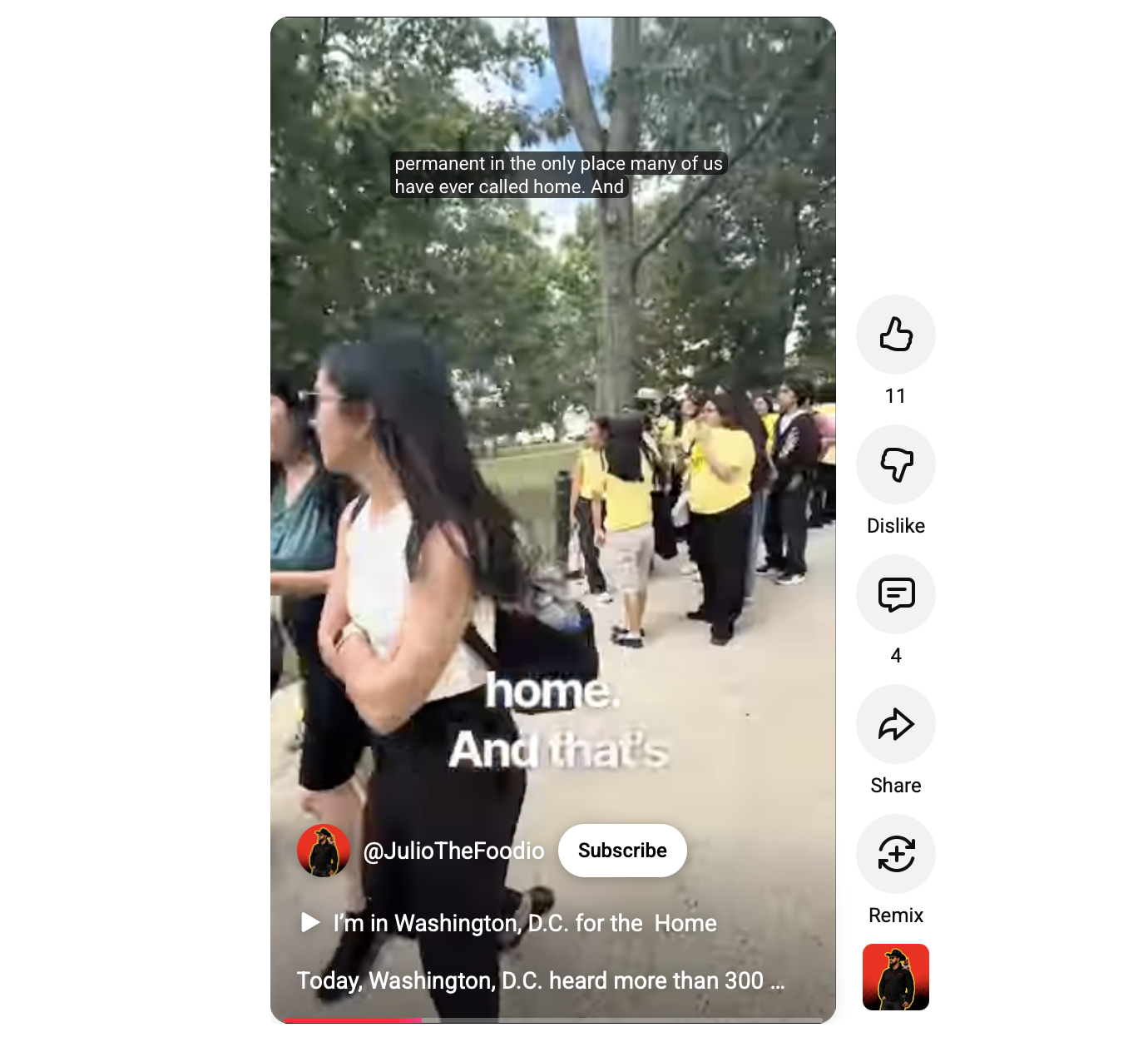
They later marched to the nearby Upper Senate Park to condemn the administration’s mass delegalization efforts that have targeted not only DACA recipients, but also millions of immigrant contributors that depend on long-standing programs like Temporary Protected Status, asylum, and humanitarian parole.
One speaker at the event noted how DACA changed her mom’s life in 2012. She was able to work legally, pursue higher education, purchase her own house, and more fully contribute to the country she calls home. But it’s now all at risk.
“Despite submitting her DACA renewal application on time and complying with every requirement, her DACA expires tomorrow,” she said. The family now expects her to be terminated from her job, not because of anything relating to her performance or professionalism, “but solely because her renewal remains pending due to prolonged government processing delays.”
“After years of dedication and hard work that my mom has given to this country, she’s facing the loss of her livelihood through no fault of her own,” she continued.
She’s not alone. These processing delays have stretched anywhere from several months to as long as a year, risking livelihoods and impacting fields that are already facing critical worker shortages. Essential healthcare worker Juan Chavez Velasco, for example, submitted his renewal months ahead of time. During that wait, he was abducted by mass deportation agents while attempting to deliver milk to his hospitalized infant. While he has since been released, his status expired while he was in detention.
During a floor speech on Monday, Sen. Catherine Cortez Masto (D-NV) said that the administration has been “intentionally delaying DACA renewals so DACA recipients go unprotected.” Jaime Rangel, the regional government relations director for FWD.us, echoed the sentiments to the Nevada Current. “It’s intentional, it’s systemic,” Rangel said.
During his remarks, Sen. Alex Padilla (D-CA) touched on the administration’s mass delegalization campaign, saying that the entire immigrant community across the country is “under attack.” This was a point similarly raised by Juliana Macedo do Nascimento, Deputy Director of Advocacy and Campaigns for United We Dream, in her recent guest post at Charting a New Narrative on Immigration. While the first Trump administration’s initial plan to terminate DACA failed thanks to the courts, it shifted tactics “to make legal status itself more temporary, fragile, and easier to take away.”
“TPS holders have faced repeated efforts to terminate protections they have relied on for years,” Macedo do Nascimento wrote. “Humanitarian parole programs have been targeted for rollback. Asylum seekers face growing barriers to protection and outright bans. Even birthright citizenship, a constitutional guarantee that has stood for more than 150 years, has become the subject of unprecedented attacks.”
“Different communities may face different legal challenges, but the underlying message is the same: no matter how long you have lived here, how deeply rooted you are in your community, or how much you contribute, your place in this country can still be questioned,” she continued.
But the fact is that young immigrants belong here – and not just because they have called this country home for decades, have built families and homes here, help keep us healthy through their essential work, and contribute billions annually to keep our country itself moving ahead. These young people embody the American Dream that we all cherish and hold dear – and keeping that dream alive should matter to all of us.
And as Bloomberg columnist Mary Ellen Klas noted earlier this year, during one of the most perilous times we have faced in our 250 year history, America “needs its most optimistic young people in the country to have a place at the table now.”
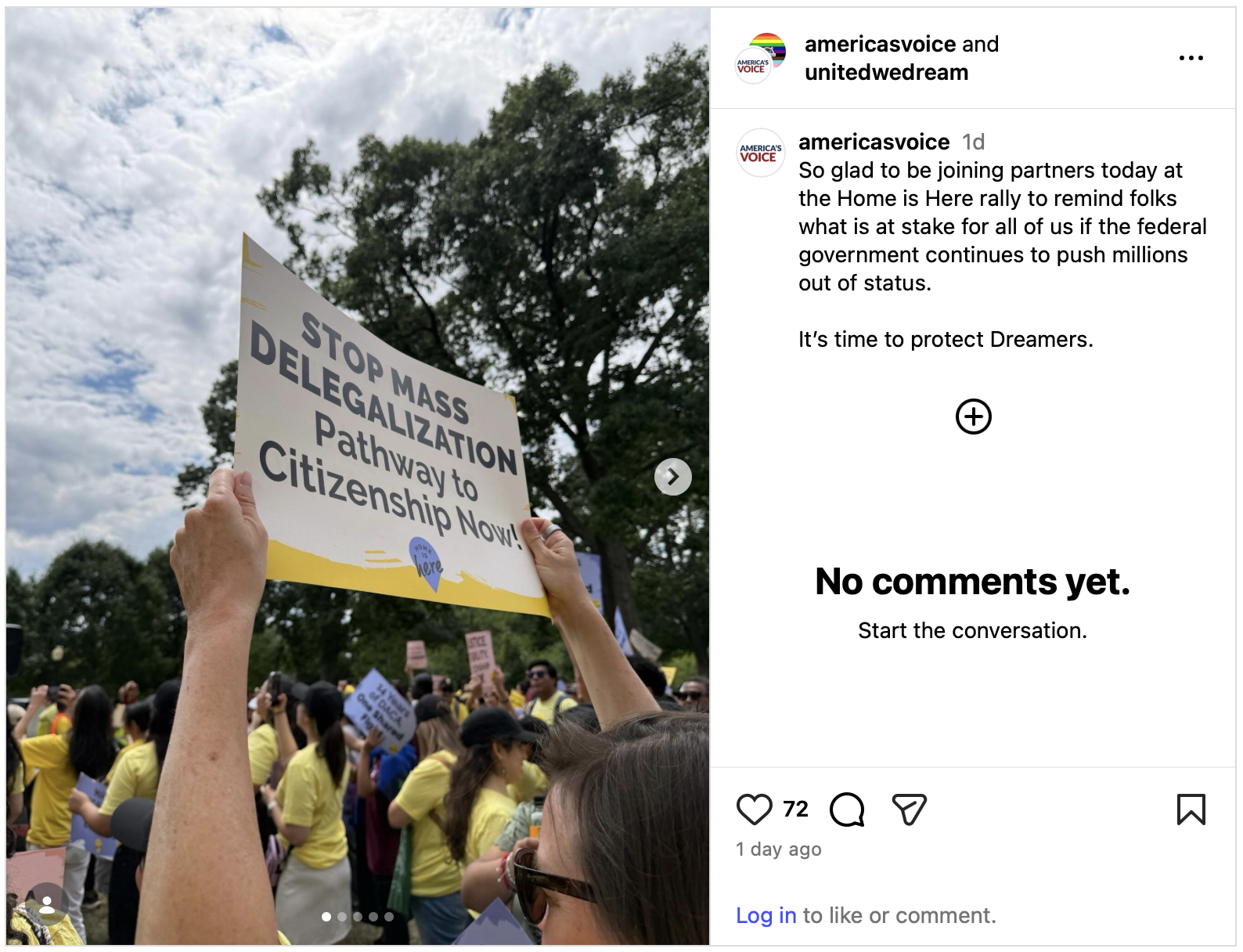
“14 years ago, something monumental happened in this country,” said United We Dream Executive Director Greisa Martinez Rosas, who was this week named to TIME’s inaugural Visionaries list. “Not just the announcement of the DACA program, but the beginnings of real possibility. The possibility that immigrant youth, queer and trans youth, working-class youth, could be the ones to shape history. DACA’s anniversary is a moment for Congress to see the truth: all across the country, we are witnessing an ongoing mission to delegalize millions of people by eroding the very protections they rely on, DACA included.”
“If left unchallenged, its consequences will reach far beyond any single program, touching families, neighborhoods, and the very ideals of justice,” Martinez Rosas continued. “In the workplace where employers can exploit fear, where workers are afraid to report wage theft, unsafe conditions, or abuse. Today, we call on Congress to deliver for working people and deliver citizenship now!”
DACA at 14: What the Rise of Mass Delegalization Means for America’s Future
The administration’s mission to end the popular and successful DACA program, which turns 14 this week, has evolved into a broader effort to make legal status itself easier to take away
This is a guest post by Juliana Macedo do Nascimento, Deputy Director of Advocacy and Campaigns for United We Dream.
Fourteen years ago, queer, trans and immigrant youth changed the course of this country.
After years of organizing and refusing to accept exclusion, our community won Deferred Action for Childhood Arrivals (DACA). The program transformed hundreds of thousands of lives, including mine, and ensured young immigrants could work legally, pursue higher education, support our families, and contribute more fully to the communities we’ve always called home.
I was driving to a job interview when I heard about DACA for the first time on the radio. Suddenly, a whole future was within reach. I was 26 years old, finally transferring to a four-year school from community college for a degree I had never been sure I would get to use, and now I could see myself doing internships, having a career in something I was passionate about, and being able to take care of my family.
DACA represented something larger than a policy victory. It was proof that immigrants belong here. But even then, we understood an important truth: DACA was never meant to be the finish line. It was a temporary solution to a problem that Congress, to this day, has failed to solve.
Fourteen years later, the reality of DACA’s temporariness has become impossible to ignore. Today, the greatest threat facing immigrant communities is no longer limited to the fate of one program. Across the country, we are witnessing the rise of a broader agenda: mass delegalization.
For years, anti-immigrant politicians have been focused on preventing people from gaining legal protections in the first place. When efforts to end DACA outright faced strong public backlash and community-led resistance, their strategy evolved. Instead of targeting one program at a time, they began pursuing a broader effort to weaken, revoke, or undermine protections that millions of immigrant communities rely on, from DACA to Temporary Protected Status (TPS) to humanitarian parole.
While the tactics are changing, the goal is the same. What began as an effort to end DACA has evolved into a broader effort to make legal status itself more temporary, fragile, and easier to take away.
Today, DACA recipients continue to face legal uncertainty despite following every rule placed before them. Tens of thousands of new applications remain blocked. Court challenges attempting to revoke work permits continue. Prolonged renewal delays make it harder to maintain current protections. Hundreds of DACA recipients have been detained and deported despite their active status. And Congressional failure as recent as this month to pass amendments that would address many of these direct threats continues to be an admission that Congress is allowing DACA to be hollowed piece by piece until its protections exist in name only.
But DACA recipients are not alone. TPS holders have faced repeated efforts to terminate protections they have relied on for years. Humanitarian parole programs have been targeted for rollback. Asylum seekers face growing barriers to protection and outright bans. Even birthright citizenship, a constitutional guarantee that has stood for more than 150 years, has become the subject of unprecedented attacks.
Different communities may face different legal challenges, but the underlying message is the same: no matter how long you have lived here, how deeply rooted you are in your community, or how much you contribute, your place in this country can still be questioned.
That is what makes mass delegalization so dangerous.
It does not require a single headline-grabbing policy announcement. It happens through legal challenges, administrative decisions, bureaucratic delays, and political attacks that steadily erode protections and benefits. The consequences extend far beyond immigrant families themselves. Employers lose workers. Schools lose educators. Hospitals lose caregivers. Communities lose neighbors, leaders, and taxpayers.
At a moment when employers are struggling to fill positions and industries across the country face workforce shortages, removing immigrants from the workforce is not a serious economic strategy—it is self-inflicted economic harm. DACA recipients serve as teachers, nurses, healthcare workers, entrepreneurs, and construction workers in communities across the country. Millions of other immigrants with temporary or conditional protections play similarly essential roles.
The economic stakes are enormous. Analysis has found that ending DACA could eliminate hundreds of thousands of jobs and result in up to $648 billion in lost future earnings nationwide. Those losses would be felt not only by immigrant families, but also by employers, local economies, and communities that depend on their contributions.
Yet immigration continues to be framed by some politicians as a question of who can be excluded rather than how we build a stronger future together. Too often, the conversation centers on removal instead of investment in working families, many of whom are immigrants.
That is why DACA’s anniversary should not only be a moment to defend the program. It should also be a moment to learn from its limitations. DACA changed lives, opened doors, and created opportunities. But it was never intended to provide the permanence people need to build their futures fully. It was always a stepping stone in the fight for a pathway to citizenship for all.
A pathway to citizenship remains the only solution capable of providing the stability that many mixed-status working families, communities, and our economy need. Citizenship allows people to put down roots, buy homes, start businesses, support their families, and fully participate in civic life without fear that a court decision or political shift could upend their future overnight.
For nearly twenty-five years, immigrant youth have fought for that vision. We fought for it before DACA existed. We fought for it after DACA was won. And we continue fighting for it today. Fourteen years after DACA, the question facing the country is larger than the future of a single program. Will we continue down a path where millions of people remain vulnerable to shifting political winds? Or will we finally create a system that offers permanence, stability, and belonging?
The answer should be clear.
And while we continue to push Congress to act, we hold onto the truth that has kept us fighting for this long: We are here, we belong here, and America’s future is bound to ours.
Trump Is Making the U.S. As Unwelcoming As Possible For the World Cup
Not even soccer fans from long-standing U.S. allies are safe from being targeted and denied entry
This is a guest post by Thomas Kennedy, policy advisor for the Florida Immigrant Coalition (FLIC).
Former Mayor Francis Suarez, best known for peddling MiamiCoin, a cryptocurrency that lost 99 percent of its value after its launch and was soon suspended from trading, went live from Ocean Drive a few days before the World Cup was scheduled to begin to announce that Miami is ready.
In a social media video announcing a Fox and Friends appearance and with a backdrop of grotesque makeshift statues of players like Lionel Messi, Christian Pulisic, and Lamine Yamal, Suarez was eager to discuss the “economic impact” of the World Cup while claiming that Miami is at the center of the world’s game.
Miami and its airport did make international headlines when award-winning referee Omar Artan was denied entry to the United States, preventing him from becoming the first Somali official to officiate at a World Cup finals. He was among 52 referees selected by FIFA for the World Cup and had a valid visa. Contributing to the hostile climate surrounding the World Cup, FIFA revoked the ticket allocation for Iran fans at the team’s three World Cup games in the United States. Not even fans from long-standing U.S. allies are safe from being denied entry, with at least 40 Moroccan fans denied U.S. visas despite spending months preparing for the World Cup, spending thousands, and having a spotless record of following their national team abroad.
The barrage of stories like these are contributing to a lack of enthusiasm for the World Cup. The Financial Times reports that FIFA is facing empty seats at matches while 180,000 tickets hit the resale market. Here in Miami, we are now the second-most expensive FIFA World Cup host city, with four of the top ten most expensive tickets in the tournament. This is despite Miami-Dade taxpayers contributing more than $60 billion to FIFA, an organization that is expected to rake in more than $13 billion from the World Cup, and that shares none of this revenue with host cities. The rationale was that a tourism boom would benefit residents, but so far, that has not manifested, and hotels and short-term rentals are cutting prices amid a lack of demand.
The lack of interest in the World Cup is not surprising. The vibes are off. The Trump administration seems to be doing everything in its power to make the United States as unwelcoming a country as it can be as the tournament begins.
The concerns have been building for months. During the first Club World Cup matches in Miami earlier this year, the Department of Homeland Security (DHS) told NBC that attendees should expect to be asked to provide proof of legal status, without explaining how such checks would be conducted. Although no widespread document checks ultimately took place, the statement itself fueled fear and uncertainty, leaving many fans worried that simply attending a match could expose them to immigration enforcement.
Just weeks later, a boat carrying Miami-Dade Mayor Daniella Levine-Cava and other high-profile guests to a Club World Cup-related event was boarded by the U.S. Coast Guard and federal immigration agents. The operation lasted more than two hours, during which the catering staff and boat crew were required to produce documentation proving their legal status. The vessel ultimately abandoned its trip and returned to shore without reaching its destination.
Other enforcement actions have underscored the risks facing both Floridians who are immigrants and international visitors. Last year, two brothers from Mexico were detained following a traffic stop near Orlando, including one who held a valid tourist visa and was married to a U.S. citizen. Both were transferred to the Everglades detention camp, triggering a diplomatic dispute that required intervention by the Mexican government to secure their release through deportation. They later described being confined in cages holding 36 people each.
In another case, an asylum seeker attending a Club World Cup event in New Jersey with his family was operating a recreational drone in a stadium parking lot before a match when he was arrested and detained by ICE. He spent 11 weeks in custody before being deported to the country from which he had originally sought asylum.
None of this is reassuring to see if you are an international tourist coming for the World Cup, or a fan with a precarious immigration status looking to enjoy a match with your family. Aside from the prohibitive cost due to FIFA’s greedy price gouging, hearing of these aggressive immigration enforcement practices, from an agency that made headlines just a few months ago for shooting and killing two U.S. citizens in broad daylight, would make a lot of people think twice before risking traveling or attending World Cup events in the United States.
Here in Miami, we are fighting back in light of inaction and outright complicity from local officials and our host committee. We have held numerous press conferences, released a statewide travel advisory highlighting police-ICE collaboration practices in Florida, signed on to a national travel advisory from the ACLU and Amnesty International, and worked on a coalition letter signed by 30 labor groups calling for better worker conditions at FIFA events.
Our demands are simple: first, FIFA should adopt a proactive strategy to protect immigrant communities by establishing direct and ongoing engagement with consulates, legal service providers, and community advocacy organizations. Frontline personnel should be trained to prioritize coordination with these trusted institutions rather than defaulting to enforcement-based responses. Building partnerships with community organizations is essential to fostering trust, protecting vulnerable attendees, and ensuring that safety concerns are addressed without creating unnecessary fear.
FIFA must also commit to ensuring that all World Cup-related events remain free from immigration enforcement activity. The presence of ICE at or around tournament venues creates a climate of intimidation that discourages participation and undermines the spirit of a global sporting event. Given documented patterns of racial profiling and enforcement actions affecting people regardless of their status, keeping enforcement agencies away from FIFA events is critical to ensuring that all fans, workers, and participants can attend without fear.
Finally, FIFA should publicly call for a moratorium on immigration enforcement operations in connection with World Cup matches and associated events. This is not an extraordinary demand but a minimum safeguard necessary to protect families, preserve public confidence, and uphold the tournament’s commitment to inclusion.
Unfortunately, these demands have not been met in Miami or elsewhere. When responding to a recent press conference organized by our groups, Host Committee member Rodney Barreto claimed that he received personal assurances from Secretary of State Marco Rubio that immigration enforcement agents would not operate at FIFA World Cup venues, only to be contradicted just days later by DHS Secretary Markwayne Mullin, who clarified that while large-scale immigration raids would likely not take place, immigration enforcement arrests by ICE are not off the table.
Everything said by Trump administration officials, FIFA, and, sadly, its host committees should be met with skepticism. Informal promises behind closed doors are insufficient amid an unprecedented escalation of immigration enforcement across Florida and the United States. Unfortunately, this has resulted in an erosion of trust among local communities, fans, and authorities, harming the sport in the process.
Legal Seek Demand Justice For U.S. Citizens and Immigrants Terrorized by Mass Deportation Agents
“Together, they bring these actions to demand that no government agency acts with such blatant disregard for civil and human rights again”
In the year since the Trump administration’s unjustified invasion of Los Angeles, American citizens and immigrants subjected to violent and unconstitutional assaults and arrests by mass deportation agents have been fighting for justice.
Those relentlessly pushing for accountability include attorney Vanessa Valdez, who last June stood before the Oxnard City Council to condemn the harassment of community members like Juan Carlos Ramirez, a U.S. citizen who was brutally assaulted by mass deportation agents who were abducting his father. Armed Immigration and Customs Enforcement (ICE) agents “pepper-sprayed Ramirez, slammed him onto the hoods of two vehicles, punched his face and kneed him in the side, according to a legal claim he later filed against the federal government,” The Los Angeles Times reports.
“This past week especially was very difficult for our team, because we were trying to make sure our schools were safe,” Valdez told the Oxnard, California mayor and council members at the time. “We know there were graduations being held, promotions being held, and so we wanted to make sure our families felt safe and they knew that they could count on support at a moment’s notice if needed.”
But little did Valdez know that she would soon be the next target of the administration’s mass deportation obsessions. Despite identifying herself as a legal observer, the attorney was shot six times with rubber bullets during a massive raid at cannabis company Glass House Farms the following month. Unable to see due to tear gas, she had to crawl on all fours to escape the state-sponsored violence.
“Ramirez and Valdez are among the dozens of U.S. citizens and immigrants who are seeking financial compensation for damages they say they suffered during President Trump’s immigration dragnet,” The L.A. Times now reports. “For Valdez, that includes the cost of hospital visits, lost wages as she recovered, anxiety medication and seeing a therapist.”
In his guest post at Charting a New Narrative on Immigration, Coalition for Humane Immigrant Rights’ (CHIRLA) Jorge-Mario Cabrera similarly noted that while Angelenos mobilized overnight to coordinate support for impacted individuals – including setting up mutual aid funds, delivering groceries to homes where breadwinners were suddenly disappeared, and driving folks to court hearings and check-ins – “there is still pain. Families continue to heal from trauma that cannot simply be erased. Many live with the scars of separation, detention, and fear.”
For Tolulope Akinsulie, the scars of separation, detention, and fear are plainly visible. He still bears the scars from dog bites following a military-style raid on his Chicago apartment building last September, when federal agents armed like they were going to a war zone “broke down doors without warrants” and “rounded up adults and children alike at gunpoint in the middle of the night,” said a coalition of civil rights organizations.
“The complaints describe individuals being held at gunpoint, physically kicked or struck by rifles, and marched outside in little to no clothing or pajamas,” said the Mexican American Legal Defense and Educational Fund (MALDEF), the University of Chicago Immigrants’ Rights Clinic (IRC), the MacArthur Justice Center, and the National Immigrant Justice Center (NIJC). “Residents were targeted based on race and ethnicity. Detainees were not told why they were being held and were never shown warrants, and were barred from contacting attorneys.”
Meanwhile, U.S. citizen children as young as one-year-old “screamed and cried in terror” at the sight of gunmen while one teen said he was zip-tied along with his mother, ProPublica reported.
Akinsulie, an immigrant originally from Nigeria, was asleep in his bed when he saw “heavily armed federal agents rushing into his apartment,” the report said. “He then felt the jaws of a large dog biting into his right ankle, knocking him to the floor. Akinsulie screamed as the dog tore the flesh from his ankle, thighs, hip and wrist.” Akinsulie said he endured unsettling nightmares where dogs chased him and even talked to him.
He’s since become one of 18 U.S. citizens and immigrants to have filed legal action against the federal government, both to “pursue remedies for their individual harms and to hold the entire system accountable,” groups said. “Together, they bring these actions to demand that no government agency acts with such blatant disregard for civil and human rights again.”
Despite these undeniable abuses against American and immigrant communities alike, Congressional Republicans this week voted to hand ICE and Customs and Border Protection (CBP) another $70 billion in taxpayer dollars without the oversight and accountability demanded by Americans. “An additional $70 billion in funding for masked agents and brutality in our neighborhoods with little to no accountability is a travesty for American families who are trying to make ends meet,” commented America’s Voice Executive Director Vanessa Cárdenas.
This massive infusion of cash does not mean the fight for accountability and justice is over. In fact, it now becomes as important as ever.
“Unarmed people were asleep in their homes when they were met with a level of force and cruelty that would be unthinkable outside a battlefield,” Samuel White, student attorney with the University of Chicago Immigrants’ Rights Clinic, said in the statement on the legal action from Chicago residents. “Yet, despite this administration’s rhetoric, this is not a war. Immigrants are human beings with legal rights, and we intend to use every available legal tool to hold those responsible accountable and secure the justice our clients deserve.”
Immigrant Heritage Month: America Runs On Immigrants’ Power
“Without our immigrant neighbors, New York City and the U.S. at large would not exist as they do now”
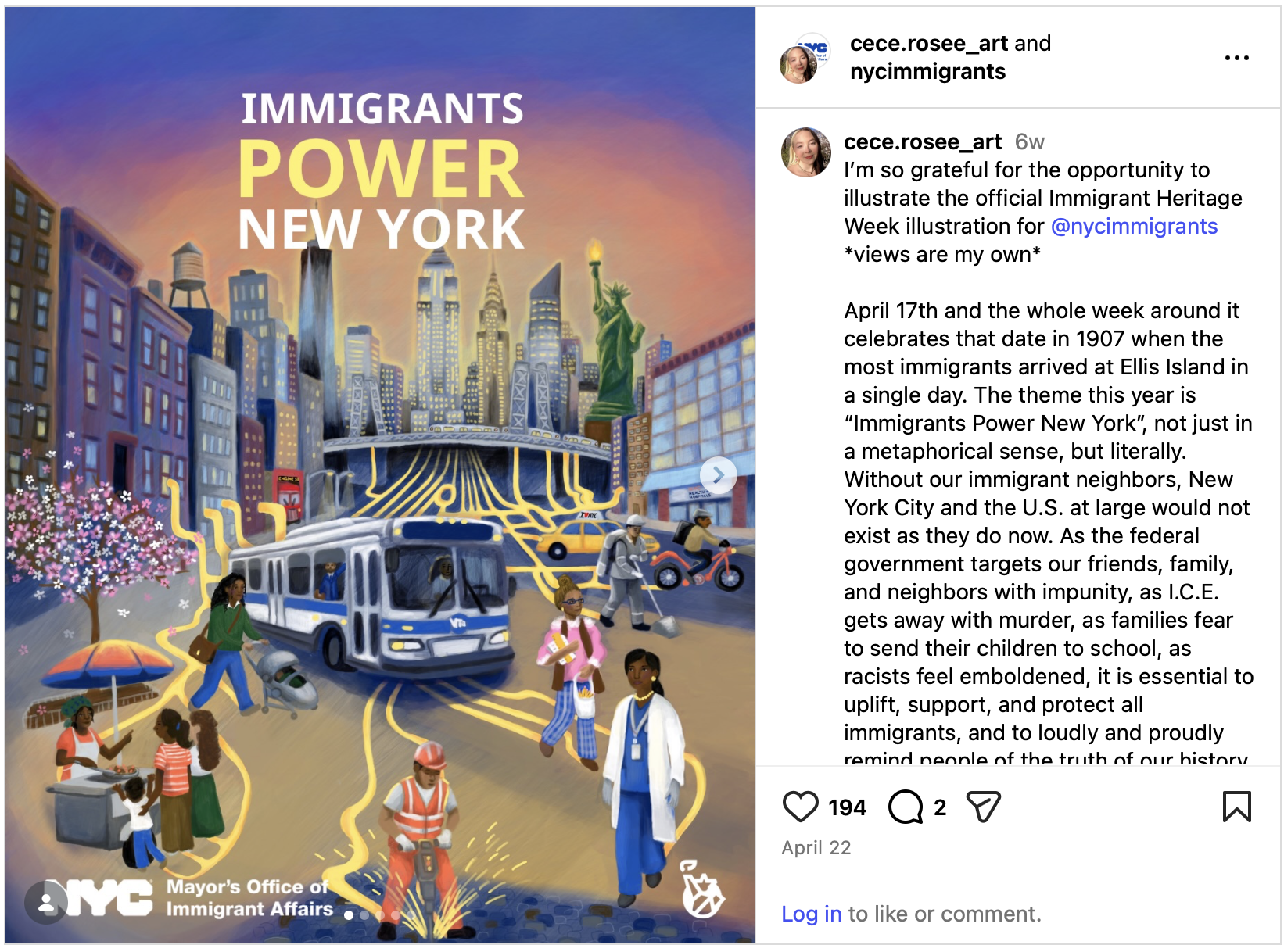
New York City is marking June’s Immigrant Heritage Month with an “Immigrants Power New York” theme, reminding us how immigrant New Yorkers seeking new lives and opportunities for themselves in the U.S. also contribute to the region’s workforce, economy, and status as one of the most famed cities in the world.
And what better city to tell that story?
“More than 40 percent of U.S. citizens can trace their ancestry back to immigrants who arrived in the United States through Ellis Island,” as the NYC Mayor’s Office of Immigrant Affairs notes. Even one of the notoriously anti-immigrant voices around can trace his roots to Ellis Island (but that’s a story for another day).
Today, more than one out of every three New Yorkers is an immigrant, and their households have helped propel New York into one of the top economic contributors in the nation, paying nearly $75 billion in local, state, and federal taxes annually. More than 316,000 New Yorkers are immigrant entrepreneurs, and cumulatively their businesses generate $8.6 billion in total business income.
“The theme this year is ‘Immigrants Power New York’, not just in a metaphorical sense, but literally,” said artist Celia Deming-Bernstein, who created the art to accompany this year’s theme. “Without our immigrant neighbors, New York City and the U.S. at large would not exist as they do now.”
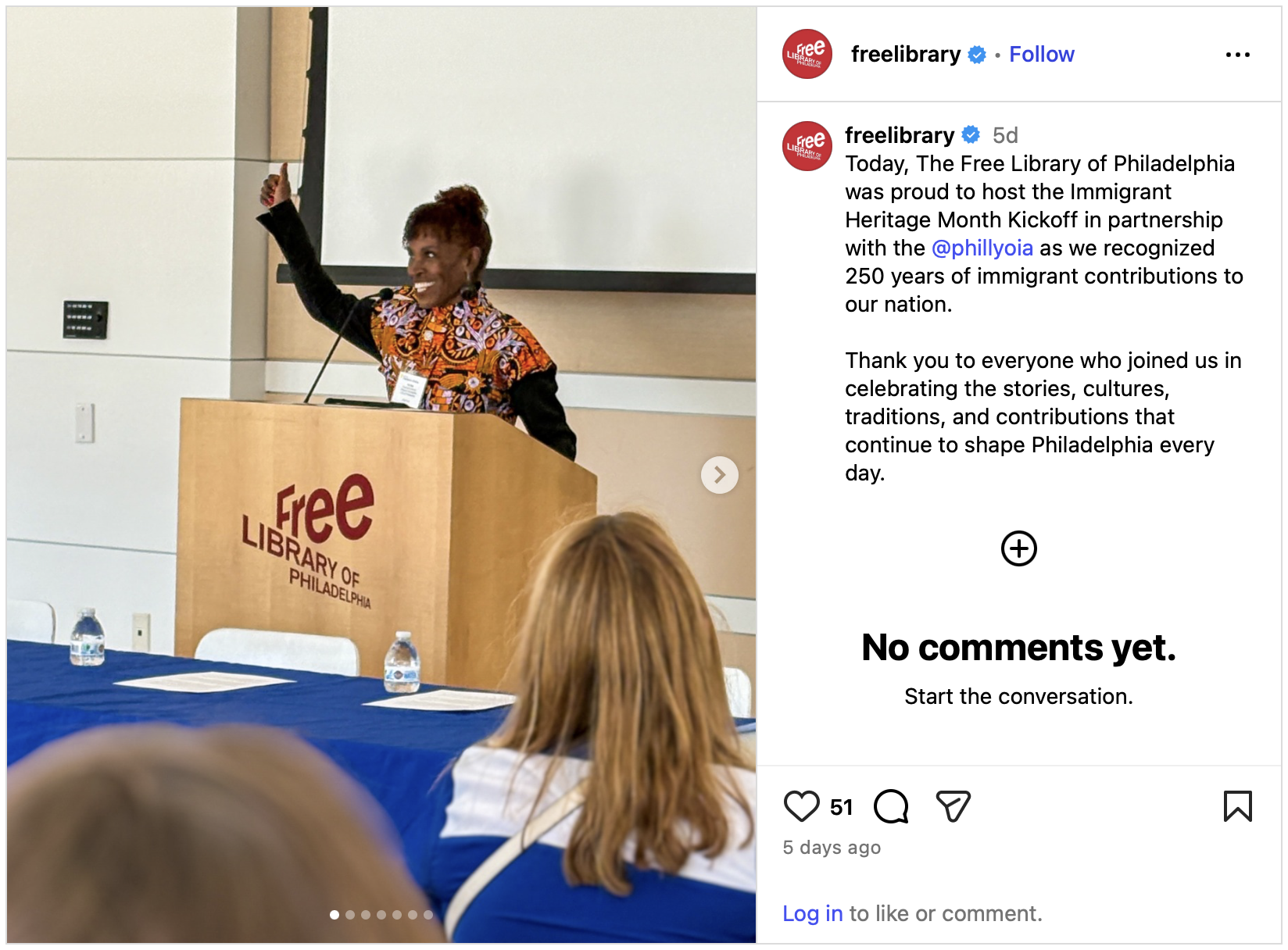
Events honoring our immigrant neighbors have been underway all over the country, with more scheduled all throughout the month. In Pennsylvania, the Free Library of Philadelphia hosted an Immigrant Heritage Month kickoff to honor two and a half centuries of immigrant contributions to the United States.
“As the nation approaches the 250th anniversary of the signing of the Declaration of Independence in 1776, city officials are reframing the milestone as a story not only of the nation’s founding, but of the generations of immigrants who have helped build Philadelphia into what it is today,” Impacto Media reports. The event, held in partnership with the Philadelphia Office of Immigrant Affairs, featured community guests who spoke to how the city’s immigrant story is “lived and renewed every day,” the report said.
According to Pew, immigrant Philadelphians account for nearly 16% of the population, which is the highest level in 80 years. In fact, immigrants have “single-handedly stemmed the tide of depopulation,” The Welcoming Center CEO Anuj Gupta said last year. These community members “generated $7.4 billion in consumer spending and paid $2.3 billion in taxes in 2024, demonstrating substantial economic clout,” the Economy League noted in February.
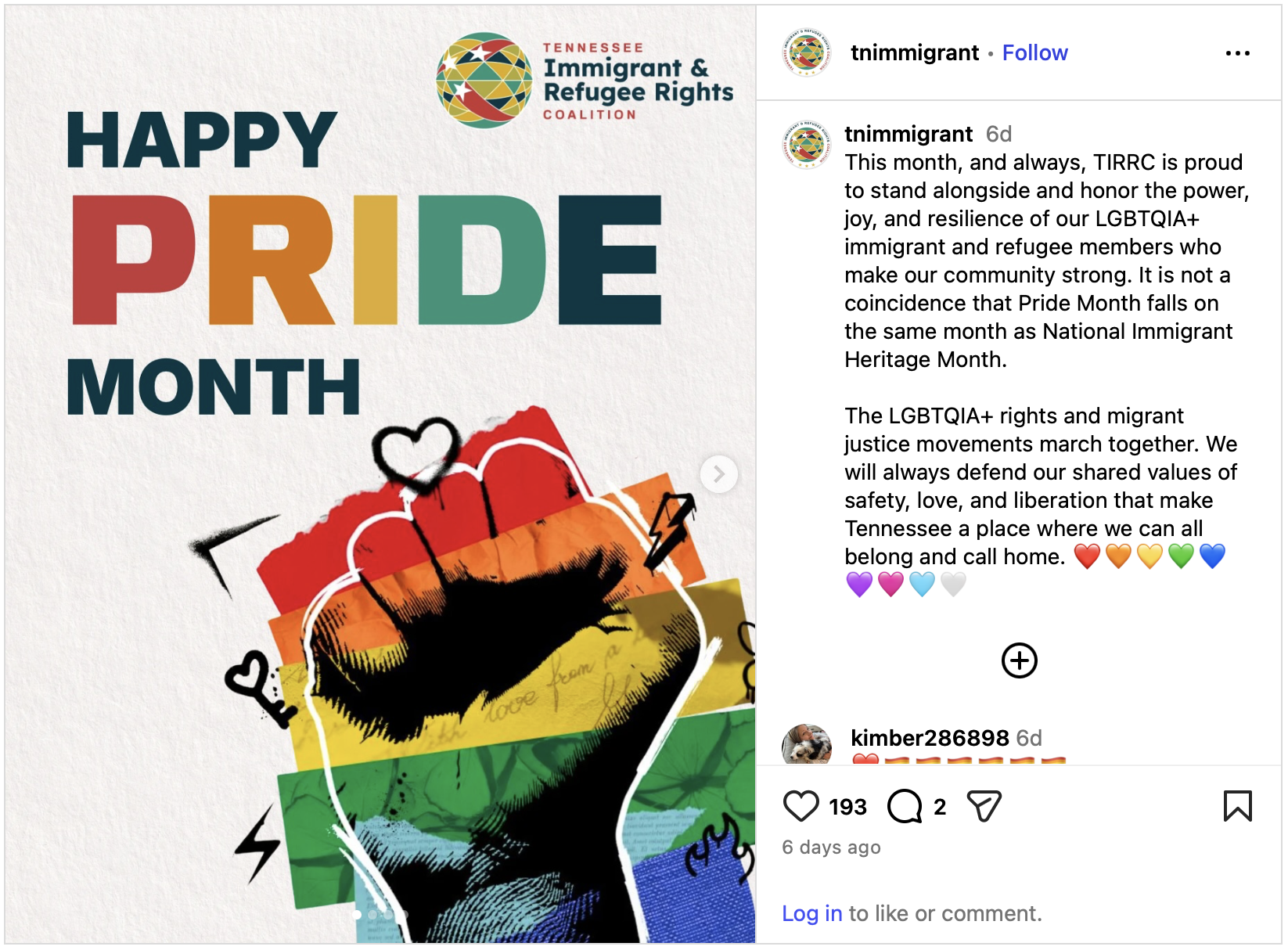
In Tennessee – where the foreign-born population has doubled in a decade – a display made up of hundreds of walking shoes serves as a poignant reminder of the “sacrifice and resilience exhibited by immigrants and refugees who have come to the United States and have settled in Nashville,” WSMV reports. Tennessee Immigrant & Refugee Rights Coalition (TIRRC) also reminds us that it’s no coincidence that Pride Month falls on the same month as Immigrant Heritage Month. The “power, joy, and resilience of our LGBTQIA+ immigrant and refugee members” make “our community strong,” TIRRC said.
“The LGBTQIA+ rights and migrant justice movements march together,” TIRRC continued. “We will always defend our shared values of safety, love, and liberation that make Tennessee a place where we can all belong and call home.”
Haitian Bridge Alliance further notes that June also marks Caribbean American Heritage Month, which honors the millions of Caribbean immigrants “whose contributions have helped shape the economic, cultural, political, and social fabric of the United States.”
“Caribbean immigrants represent one of the fastest-growing immigrant populations in the country,” the organization continued. “According to the Migration Policy Institute, the Caribbean immigrant population in the United States has grown by more than 40 percent since 2010, with millions of individuals contributing to America’s workforce, entrepreneurship, healthcare, education, public service, and innovation. Haitians and Jamaicans remain among the largest Caribbean immigrant communities in the nation.”
In California, the L.A. County Aging & Disabilities Department similarly highlights the critical role that immigrants play in the caregiving industry. “They are the quiet force holding our care system together, providing care, love, stability, and education,” the National Women’s Law Center said last year. “In 2019, 36.5% of all home health aides in the United States were immigrants, a rate that was twice their share of the U.S. workforce overall (17.1%),” the American Immigration Council said in 2023. “This includes undocumented workers, who made up an estimated 6.9% of home health aides and 4.4% of personal care aides.”
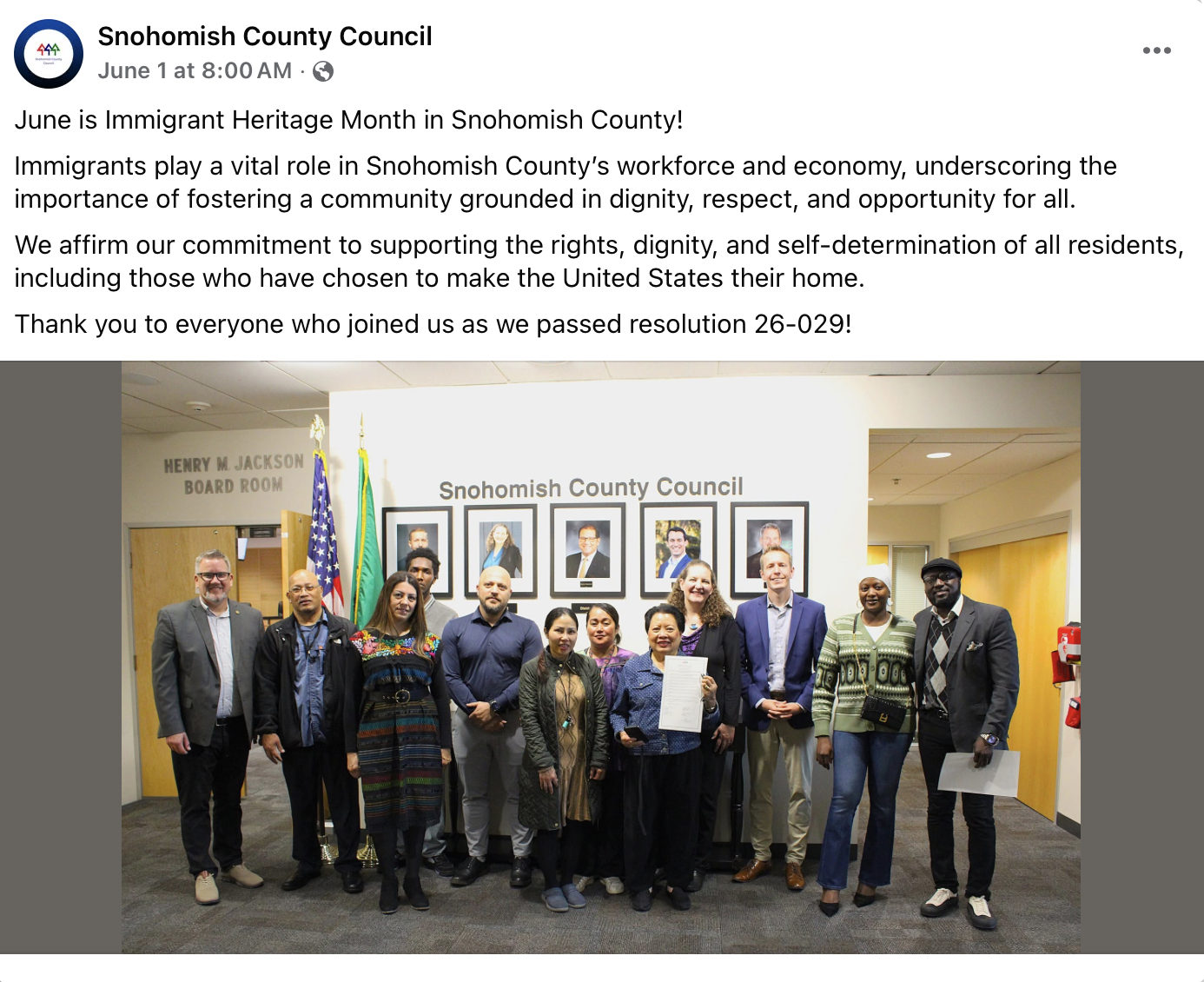
In Washington state, Refugee & Immigrant Services Northwest is among local voices applauding the Snohomish County Council’s proclamation recognizing June as Immigrant Heritage Month. The organization’s executive director, Van Dinh-Kuno, said her own immigrant story “is one of the million stories from the refugee and immigrants” who “come to this country.” She was just 17 when she fled Vietnam following the fall of Saigon and, along with her family, spent days in a boat in the Pacific Ocean until they were rescued by the U.S. Navy.
“We’re grateful for the great nation accepting us, allow us to be part of the fabric of the nation, and particular fabric of Snohomish County,” Dinh-Kuno said.
 Other social media posts marking Immigrant Heritage Month uplifted upcoming events and ways to participate in the festivities. Global Refuge, for example, wants to know your immigration story:
CHIRLA’s guest post on the one year anniversary of the federal government’s anti-immigrant raids in L.A. serves as a reminder of the power of immigrant communities coming together and is worth a read this month:
No matter what certain opponents might claim, the fact is that immigration is good for the United States. In city after city and state after state, immigrants, regardless of legal immigration status, make more than robust contributions that help sustain federal programs like Medicare and Social Security, fund schools and libraries, and boost local and national economies for the benefit of everybody. In 2023 alone, tax contributions from immigrant community members totaled nearly $562 billion, helping secure a healthier and more secure future for all.
And, unlike the richest Americans in the country, these immigrant workers contribute more than their fair share. Past research from the Institute on Taxation and Economic Policy found that across 40 states, “undocumented immigrants pay higher state and local tax rates than the top 1 percent of households living within their borders.”
Immigrant Heritage Month should serve as a reminder to all of us that our nation can only get ahead if we all get ahead together.
Hunger Strikes Over Abuse, Inhumane ICE Conditions Spread To At Least Four States
One Baptist minister said that in his nearly ten years of visiting detained immigrants, the past year “has been the worst”
The ongoing abuses at the GEO Group-operated Delaney Hall private prison in New Jersey are not an aberration. Hundreds of immigrants detained in at least four other private detention facilities – all operated by the same private prison profiteer – have also launched hunger strikes in past weeks in protest of inhumane conditions and due process violations, including denying individuals access to attorneys, adequate medical and mental health care, and safe food and water. The administration has inexplicably been denying these strikes are even happening while also threatening to force-feed detained individuals, as Reason notes.
“Trump’s cruel mass detention expansion is exacerbating the inhumane conditions that are inherent to ICE’s detention system and have been well documented for decades,” Detention Watch Network said. “Over the past year, there have been increasing reports of death, medical neglect, use of force, isolation, retaliation, overcrowding, lack of food, and rampant transfers that cut people off from their loved ones and support networks. A shocking 18 people have died in ICE custody this calendar year — and 49 people total have died under this administration.”
In the Golden State, at least 120 immigrants detained at the Adelanto ICE Processing Center and the Desert View Annex – both operated by GEO Group – have been striking over conditions so unbearable that one individual has attempted suicide.
“They say they are facing emotional and psychological distress from a prolonged and unconstitutional, indefinite detention,” L.A. Taco reports. “They write that the food they eat is unfit to serve as animal feed. They say that they go weeks without medical care, having to lie on the ground to be seen.” Civil rights advocates said that when one mentally ill man detained at Desert View Annex began drinking shampoo, ICE and GEO Group staff simply moved him to a different dorm instead of getting him the urgent medical attention he needed.
At Adelanto, one visiting Baptist minister described detained immigrants suffering from treatable medical conditions and pieces of food moving on a plate “because there were maggots inside them.” The Clergy and Laity United for Economic Justice member said that in his near-decade of visiting detained individuals, “my last year has been the worst.”
Visiting federal lawmakers echoed that dire assessment, calling Adelanto “one of the nation’s most troubled immigration detention facilities.”
“The problems at Adelanto are not new, and they are not isolated,” said Congressional Asian Pacific American Caucus Chair Judy Chu (CA-28). “They are the result of years of neglect that have continued despite repeated warnings, congressional oversight, and detainee deaths. Adelanto has had countless opportunities to change and has failed time and again. It is time to shut down this facility once and for all.”
Stateline reports that strikes have also “erupted at the 1,800-bed North Lake Processing Center in Baldwin, Michigan, and at the Moshannon Valley Processing Center in Clearfield County, Pennsylvania, which has a capacity of nearly 1,900. North Lake is the largest facility in the Midwest, and Moshannon Valley is the largest in the Northeast.” Both are GEO Group-operated.
At the Moshannon facility this past April, detained individuals have faced retaliation for striking, including being thrown into solitary confinement. Human rights experts have said that prolonged solitary confinement amounts to “psychological torture.” One man detained at Moshannon also said that staff “launched an inspection to find who is ‘leading’ the hunger strike and ‘speaking out’ about conditions there.” Recall that just days ago in New Jersey, Martin Soto was targeted and transferred after he led strike efforts at Delaney Hall. “Since his arrival, he’s been placed in solitary confinement, or as ICE calls it in “disciplinary segregation” — a punishment for being the suspected leader of a hunger and labor strike,” NJ.com reported.
Hundreds have also protested at the North Lake facility, citing conditions “dangerously short of both constitutional mandates and federal detention standards,” according to a May 14 letter from the ACLU of Michigan and the Michigan Immigrant Rights Center (MIRC).
In one example, records showed that one detained woman, identified only as “Jane Doe 2,” requested a mammogram seven times to no avail after self-detecting a lump in her breast. “An ACLU attorney repeatedly wrote to North Lake about Ms. Doe 2’s health concerns and provided an expert medical opinion that screening is needed,” the ACLU of Michigan and MIRC said, “but those communications went unanswered until the day after Ms. Doe 2 had been transferred to another detention facility and did not indicate that she had received care.”
A private prison operator that saw an 800% increase in profits during the 2025 fiscal year should not be forcing human beings to beg for basic medical attention, but that’s the end result of outsourcing civil immigration enforcement to politically-aligned corporations like GEO Group. During the 2024 campaign, it became the first corporation whose PAC maxed out to then-candidate Donald Trump, watchdog group CREW said. GEO Group also donated half a million dollars to his inauguration, Open Secrets said.
This infusion of cash into the mass deportation candidate’s campaign paid off, when the corporation secured a contract worth an estimated $1 billion to run Delaney. And we’re all paying for it, because that’s money that came directly from U.S. taxpayers thanks to Trump and Stephen Miller. And further examples of the collusion between private prisons and immigration policy, former GEO Group executive David Venturella has been tapped to head ICE. So-called “border czar” Tom Homan was also a GEO Group consultant.
In their latest letter to the public, immigrants detained at Delaney Hall revealed they “have been subjected to reprisals, discrimination, mockery, mistreatment, and threats” since launching their hunger strike, sharing that GEO Group staff “constantly threaten to deport us, transfer us to punishment units, and move us from one detention center to another; they take photos of us in the dormitories without our consent and tell us that we have no rights here.”
The life-risking actions of these brave immigrants have not been in vain. Because of their strikes, the nation is paying attention and GEO Group is feeling the heat. In New Jersey, state Attorney General Jennifer Davenport filed a lawsuit over Delaney’s refusal to allow full health inspections. Meanwhile, Newark Mayor Ras Baraka announced that he’s suing to close Delaney entirely.
Freedom for Immigrants reminds us that detained individuals go on hunger strikes only as “a last resort.” For hundreds of immigrants, that moment is here. We cannot look away, and as a nation we must confront the abuses being carried out in our names and with billions of our tax dollars.
“Again and again, detained immigrants have risked retaliation to speak out against medical neglect, isolation from their loved ones and legal counsel, the use of solitary confinement, abusive policies, and conditions that endanger human life and dignity,” said Shut Down Adelanto Coalition’s Esmeralda Santos. “Their courage in the face of systemic mistreatment demands not only recognition, but action.”
Stronger Than Yesterday Because Angelenos Choose Each Other
Trump’s militarization was meant to send a message: you don’t belong here. L.A. answered with its own message: we belong to each other
This is a guest post by Jorge-Mario Cabrera, Director of Communications at Coalition for Humane Immigrant Rights (CHIRLA).
For decades, Los Angeles has been described as a city of dreams, contradictions, struggle, and reinvention. But in the face of an upsurge in militarized immigration raids in the spring and summer of 2025 perpetrated by masked federal agents, and the abduction of thousands of Angelenos from workplaces, homes, and neighborhoods, Los Angeles revealed something even more profound: its soul.
As an immigrant rights advocate for more than 25 years, I have witnessed unimaginable pain over the years. As a member of the leadership team at CHIRLA, our organizers, lawyers, service staff, and I have stood next to wives and mothers searching for their husbands and sons taken in unmarked vehicles. I have listened to children ask why armed agents came for their father before sunrise. I have seen workers disappear from street corners, car washes, and Home Depot parking lots, not because they posed any danger, but because cruelty had become policy of the Trump administration. The fear was deliberate. The disruption was intentional. The division was manufactured.
The Trump administration attempted from Day 1 to turn immigrant communities into permanent targets — communities forced to live under surveillance, racial profiling, intimidation, and constant uncertainty. Federal agents arrived heavily armed and masked, as though they were entering a war zone instead of neighborhoods filled with caregivers, day laborers, street vendors, students, and families pursuing dignity and survival. The militarization – one blatant example was the storming of MacArthur Park – was meant to send a message: you do not belong here.
But Los Angeles answered with its own message.
We belong to each other.
When federal policies tried to isolate our communities through fear, Los Angeles responded with solidarity. When cruelty attempted to paralyze families, neighbors stepped forward to protect their neighbors. When the federal government weaponized detention and intimidation, Angelenos organized with courage, discipline, and compassion.
The response was immediate and powerful. Immigrant rights organizations such as CHIRLA did what we have always done for four decades: we mobilized and organized. Mutual aid networks formed overnight. Faith leaders opened churches as sanctuaries. Labor unions mobilized resources for impacted workers and families. Teachers, students, healthcare workers, legal advocates, and community organizers coordinated support systems that reached deep into every corner of the region. Volunteers drove families to court hearings, delivered groceries to homes where breadwinners had disappeared, raised bond funds, and accompanied terrified residents to immigration check-ins.
At the center of this resistance stood the LA Rapid Response Network — started in 2001, now staffed by thousands of volunteers, legal observers, hotline responders, organizers, and advocates who refused to allow our communities to suffer alone. They documented raids, verified enforcement activity, trained communities on their rights, and created a lifeline for families navigating chaos and trauma. Alongside them, the Labor, Immigrant, and Faith Table, also led by CHIRLA and started in November 2024, united some of the region’s most powerful moral voices into a coordinated force for justice, dignity, and accountability.
This coalition was not built on politics alone. It was built on values.
On the belief that human dignity is not dependent on immigration status.
On the understanding that workers deserve protection, not persecution.
On the conviction that diversity is not a threat to Los Angeles — it is the reason Los Angeles thrives.
What emerged during these painful months while raids were ravaging our neighborhoods was not only resistance, but transformation. Communities that had once operated separately came together with unprecedented coordination and urgency. Labor leaders stood beside immigrant youth. Clergy marched alongside street vendors. Black, Latino, Asian American, Pacific Islander, Jewish, Muslim, and LGBTQ+ organizations strengthened relationships rooted in shared struggle and collective liberation.
And while the federal government attempted to criminalize immigrant existence, Los Angeles fought back in the courts as well as in the streets.
Lawsuits by Public Counsel, ImmDef, ACLU of Southern California, and CHIRLA were filed to challenge the constitutionality of the raids and the inhumane conditions inside detention camps. Advocates exposed the targeting and arrest of vulnerable individuals protected under U visas, T visas, Violence Against Women Act protections, and those with deferred action, and humanitarian parole. Legal teams demanded accountability for due process violations, unlawful detention practices, and racial profiling disguised as enforcement. These legal battles were not abstract policy debates; they were fights for the humanity of our neighbors.
One year later, and with a monotonous drumbeat of ongoing raids, there is still pain. Families continue to heal from trauma that cannot simply be erased. Many live with the scars of separation, detention, and fear. But there is also something else now embedded deeply within Los Angeles: a strengthened sense of collective responsibility.
“Los Angeles, Más Fuerte Que Ayer — Los Angeles, Stronger Than Yesterday” is not a catchy slogan created for a rally banner or press conference. It is the lived reality of a city that chose courage over silence and solidarity over surrender.
It means understanding that resilience is not passive endurance. Resilience is organized. It is strategic. It is rooted in love for community and belief in one another. It means preparing not only to survive attacks on our communities, but to continue building a region where every person can thrive without fear.
Los Angeles remains one of the most diverse and welcoming places in the world because generations of people fought to make it so. Immigrants built this city. Workers sustained it. Organizations such as CHIRLA have helped organize it. Communities defended it. And when forces of authoritarianism and bigotry attempted to fracture it, Los Angeles responded not with cowardice, but with collective power.
That is our aspiration moving forward: not merely to resist cruelty, but to create a city worthy of the people who call it home. A city where compassion defeats fear, where belonging defeats exclusion, and where justice is not reserved for the privileged, but extended to all.
Los Angeles is stronger than yesterday because its people chose each other. And that choice continues every single day.
Immigration Highlights of the Week: Hunger Strike at Detention Center; Suicides Among Detainees on the Rise, but ICE’s Strategy Remains Unchanged
The inhumane conditions at ICE detention centers led a group of immigrants at the Delaney Hall facility in Newark, New Jersey, to begin a hunger strike over the Memorial Day holiday weekend. Federal and state lawmakers who visited the facility to investigate the allegations were met with a hostile reception from agents tasked with controlling protests outside the building.
The Associated Press reported that six people were arrested during confrontations with federal agents.
New Jersey Democratic Senator Andy Kim was hit by a pepper ball and was later mocked by DHS Secretary Markwayne Mullin, who claimed that Kim “had no business being there,” even though federal lawmakers have the authority to visit these facilities to verify prevailing conditions.
Detainees complain of a lack of adequate medical care, including a woman who allegedly suffered a miscarriage and received no assistance. They also reported that the food provided to them is spoiled and that conditions are unsanitary and deplorable.
However, as La Opinión reported, both Mullin and Border Czar Tom Homan downplayed the allegations, stating that no matter what the detainees do, nothing will stop the administration’s plans to carry out its wave of mass deportations.
“Hunger strikes do not work. So they can put themselves in a position where they’re not eating, but it’s not going to cause them to be released. We are going to continue to arrest people. We’ll continue to detain people.” Homan said.
“And matter of fact, if it gets bad enough and the prisoners feel like they’re putting themselves in extreme danger, medical danger, then we’ll force-feed them,” he added.
Mullin, for his part, responded on X, stating: “There’s only a handful of individuals who refuse to eat because they want their ethnic food. They can go back to their countries and get whatever food they want. The fact is: we’re giving them the calories they want. This isn’t Holiday Inn,” Mullin wrote.
Private detention centers, funded by billions in taxpayer dollars, generate significant profits for operators while keeping detainees in overcrowded and unsanitary conditions without access to preventive or routine medical care. There are reports of denial of emergency care, withholding of medication for chronic conditions such as diabetes and hypertension, and cases where medical assistance arrives too late. Reports also include physical, sexual, and psychological abuse at these facilities. There have been a record number of deaths in recent years and months.
The Associated Press reports an increase in suicides at these centers.
La Opinión reported that “an Associated Press investigation revealed an unprecedented increase in the number of suicides among immigrants detained by U.S. Immigration and Customs Enforcement (ICE) during President Donald Trump’s second term, raising new alarms about detention conditions and access to mental health care in the United States.”
“According to the report, at least 10 detainees have committed suicide since January 2025, a figure that far exceeds the agency’s historical records. Since last October, seven deaths have already been officially classified as suicides, making this the deadliest year on record within ICE’s immigration detention system,” the newspaper added.
“Something is deeply wrong from any public health or mental health perspective,” stated Dr. Sanjay Basu, an epidemiologist at the University of California, San Francisco.
La Opinión added that “according to the analysis, several centers ignored obvious signs of emotional distress, delayed psychological treatment, and left individuals considered at risk without adequate supervision. Most of the deceased were Hispanic men between the ages of 19 and 45 from Mexico, Colombia, Nicaragua, and other Latin American countries. Seven of them had no history of violent crimes in the United States.”
As a result of Trump’s immigration policy, detentions have increased, with more than 60,000 detainees in private prisons at any given moment.
The government continues to acquire facilities to house more people, as it has set out to strip hundreds of thousands of immigrants of protections they previously had through programs that have been eliminated, such as TPS or humanitarian parole, among others.
In fact, the new directive requiring applicants to apply for permanent residency from abroad continues to raise concerns.
Many immigrants could be negatively affected by this policy because if they do not leave the United States to process their green card application abroad, they could become subject to unlawful presence bars, making them more vulnerable to detention and deportation.
Trump’s strategy has focused on making it more difficult for millions of immigrants to maintain legal status by eliminating or not renewing programs that provided them with protection, such as DACA, effectively placing more people at risk of detention and deportation as a result of policy changes.
La Opinión reported that the American Immigration Lawyers Association (AILA) warned of the dangers of the change. Shev Dalal-Dheini, senior director of Government Relations, stated that “rather than improving the immigration system and enhancing our security, this policy risks penalizing those who are trying to comply with the law.”
At least one encouraging note
La Opinión reported that “a federal judge in California temporarily blocked a Trump administration policy that allowed for the detention and deportation of immigrants who were victims of domestic violence, human trafficking, and other serious crimes, even when they had pending immigration applications.”
“According to the ruling, DHS must provisionally restore immigration protections for applicants for U and T visas and protections under the Violence Against Women Act (VAWA) while the litigation proceeds. The ruling also orders the return to the United States of three immigrants who had been deported despite having active immigration proceedings.”
Quote of the week:
“To those unfamiliar with the issue, this might seem like a simple technical change in procedure. It is not. This is a profound change with serious consequences for individuals, families, and businesses across the country. It is yet another attempt to obstruct the legal immigration system, making it slower, stricter, and more unpredictable,” said Ben Johnson, executive director of AILA, regarding the USCIS memo that would require certain immigrants to apply for their green cards from their home countries even if they are already in the United States.